7 things VALORANT Champions Shanghai group stage revealed about the 2026 meta
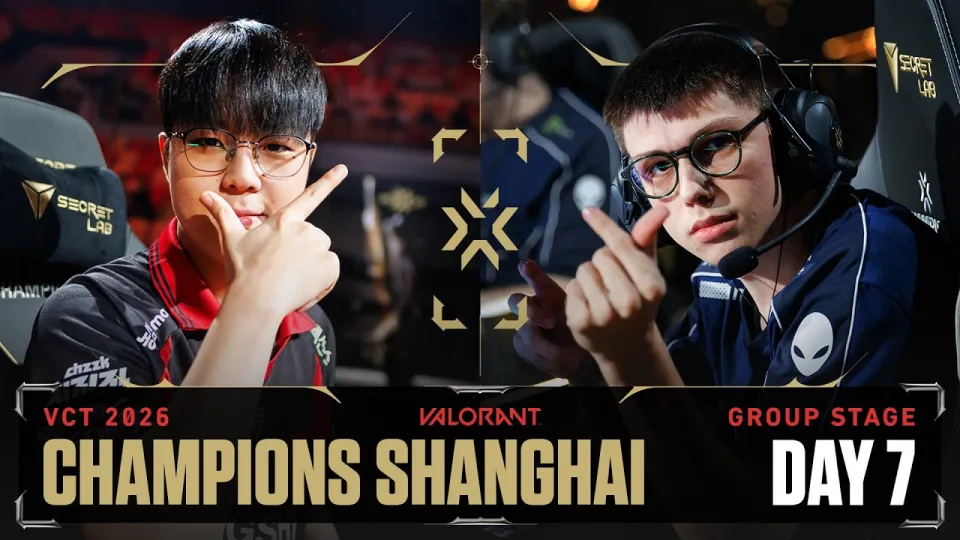
Video: VALORANT Champions Shanghai — Group Stage — Day 7
Need articles like this for your video? They help promote it on YouTube and Google — order them in the Telegram bot @sat_sit_bot. Articles with your video embedded are written and posted by the bot itself — on popular topical sites (no ads). Try it free: 50 articles on us.
· based on the channel VALORANT Champions Tour
VALORANT Champions Shanghai is the 2026 world championship, and its group stage is the stage where sixteen teams from Americas, CN, EMEA and Pacific fight for a playoff spot before the October 18 final. Day 7, published by the VALORANT Champions Tour, is a useful snapshot of where the meta sits: heavy utility discipline, long technical stoppages, and a widening gap between regions. For schedules, brackets and clips, the official feed at VALORANT Esports on X is the fastest source.
What the Champions Shanghai format actually is
Champions Shanghai is a sixteen-team world championship running from September 24 to October 18, with representatives from all four VCT regions. The group stage decides who reaches the playoff bracket, and every match is a best-of series where map pick and ban decisions carry as much weight as aim. The event closes the 2026 season, and the description frames it plainly: familiar names, new contenders and a fearless generation of challengers competing for the biggest trophy of the year. The broadcast is produced in English with closed captions, which is why so many viewers treat the VOD as a study tool rather than pure entertainment.
The tournament follows a season in which Masters produced a new champion twice, a detail that matters for reading the group stage. When two different rosters lift international trophies in the same year, no single region can claim dominance, and group-stage results become a test of adaptation rather than reputation. That is the lens worth using when you watch Day 7 back: not who won a single map, but which teams adjusted their defaults between halves.
Why technical pauses dominated the Day 7 broadcast
The most repeated complaint under the Day 7 VOD is the number of technical pauses, and it is a fair observation about the viewing experience. Long broadcasts with multiple stoppages break momentum, especially in a group stage where several series run back to back. For viewers catching up on a VOD, the practical fix is to rely on community timestamp comments that mark the start of each map, since the pauses stretch the runtime well beyond the actual play.
Pauses also change how teams play. A long break between maps resets momentum, gives coaches extra time to talk through pistol-round plans, and can cool off a roster that just won a dominant map. Analysts who review VODs should note where stoppages fall, because a comeback after a pause is not the same as a comeback inside continuous play.
The China question hanging over the group stage
Chinese teams entered Champions with home-crowd support and left the group stage facing unusually direct criticism from the English-speaking audience. The recurring argument is specific rather than vague: squads dropping eco rounds, losing 5v2 retakes, and looking short of ideas when their set strategies get broken up. Several commenters went further, claiming that stronger teams from other regions missed the event entirely, which turns every CN loss into an argument about qualification depth.
That criticism deserves context. Domestic leagues reward structure and repetition, while international group stages punish predictability. A team that wins defaults in CN can meet an EMEA or Pacific roster that forces early rotations and punishes slow utility usage. The gap is rarely about raw aim; it is about how quickly a team abandons a plan mid-round. Watching Day 7 with that in mind is more instructive than reading scorelines alone.
Utility discipline is the real separator in the 2026 meta
Utility usage, not fragging, is the clearest dividing line between the top and bottom of this group stage. The teams that look comfortable on international servers use recon and smoke tools to claim space early, then hold it with traded angles instead of hero peeks. The teams that struggle often burn their utility in the first ten seconds of a round and have nothing left for the retake.
Three habits show up repeatedly in strong group-stage performances:
- Delaying smokes until the enemy commits, rather than smoking a site before the push starts.
- Keeping one initiator tool in reserve for post-plant instead of spending everything on entry.
- Using sentinel utility to slow rotations rather than to lock a single angle.
These are coachable details, and they explain why some rosters survive a bad pistol round while others collapse for the rest of the half.
Small moments that reveal agent priorities
One of the few genuinely funny clips from the Day 7 broadcast involves a Yoru clone on Split briefly looking like a teammate holding site. It is a throwaway moment, but it points at something real: Yoru's clone remains one of the most information-dense abilities in the game when used to bait a reaction rather than to fake a push. Teams that run Yoru at Champions do it for tempo, not for flashy plays.
Agent picks across the group stage follow the same logic. Duelists who can create their own space get priority on attack, while double-initiator compositions remain the safer default on defence-heavy maps. The takeaway for ranked players is simple: copy the utility structures, not the individual highlight plays.
What Day 7 tells us about the title race
Day 7 does not crown anyone, but it narrows the field in a useful way. Rosters that adapted between maps and kept utility for retakes look like genuine playoff threats; rosters that leaned on set plays and folded once those plays were scouted look vulnerable in a bracket format. The Masters results earlier in the season, with two different champions, suggest the playoff bracket will be decided by preparation speed rather than by regional reputation.
For anyone building a watch list, the group stage is where you learn each team's comfort maps and pistol-round philosophy. Those two data points predict playoff outcomes better than group-stage scorelines, because best-of series amplify map-pool depth.
Useful links
- Official VALORANT Esports news and event hub: https://www.valorantesports.com
- VALORANT Esports on X: https://x.com/valorantesports
- Facebook: https://www.facebook.com/ValorantEsports/
- Instagram: https://www.instagram.com/valorantesports/
- TikTok: https://www.tiktok.com/@valorantesports
- Twitch: https://www.twitch.tv/valorant
- YouTube: https://www.youtube.com/@ValorantEsports
- Kick: https://kick.com/valorant
- Event photos: https://www.flickr.com/photos/valorantesports/
Final word on the Shanghai group stage
VALORANT Champions Shanghai group stage Day 7 is best read as a diagnostic rather than a verdict: technical stoppages hurt the broadcast, Chinese rosters are under real pressure to show flexibility, and utility discipline separates contenders from the rest. The 2026 season already produced two different Masters champions, which makes the Shanghai bracket genuinely open. The VALORANT Champions Tour channel is the place to follow how it resolves, and the official X account at VALORANT Esports posts brackets, schedules and results as they happen.
Key takeaways
- Champions Shanghai runs September 24 to October 18 with 16 teams from Americas, CN, EMEA and Pacific.
- Day 7 of the group stage streamed on the VALORANT Champions Tour channel and drew attention mostly for repeated technical pauses.
- Viewers flagged China's teams losing eco rounds and 5v2 situations, arguing other regions had stronger squads left out of the event.
- A Yoru clone moment on Split became one of the few lighthearted clips from the broadcast.
- Twice in 2026 a new Masters champion was crowned, setting up Shanghai as the year's biggest trophy.
Questions & answers
When does VALORANT Champions Shanghai take place?
The event runs from September 24 to October 18, closing the 2026 VCT season. Sixteen teams from Americas, CN, EMEA and Pacific compete, with the group stage feeding into the playoff bracket before the final.
Why were there so many technical pauses on Day 7?
The broadcast contained multiple stoppages that stretched the runtime well beyond the actual matches, and viewers repeatedly pointed it out in the comments. The VOD does not explain the cause of each pause, so the safest approach for viewers is to use community timestamps to jump between maps.
Are Chinese teams really the weakest region at Champions?
The criticism focuses on specific mistakes: lost eco rounds, failed 5v2 retakes and a lack of improvisation when set strategies break down. That is a real pattern in the group stage, but it reflects adaptation speed under international pressure rather than a lack of individual skill.
What can ranked players learn from the group stage VODs?
Focus on utility timing rather than highlight frags. Strong teams hold smokes until the enemy commits, save initiator tools for post-plant, and use sentinel utility to slow rotations. Copying those structures improves results more than copying individual duelist plays.
Source: VALORANT Champions Shanghai — Group Stage — Day 7 · Markdown version