Wardogs Season 2 rain has turned the game into something you have to relearn from scratch
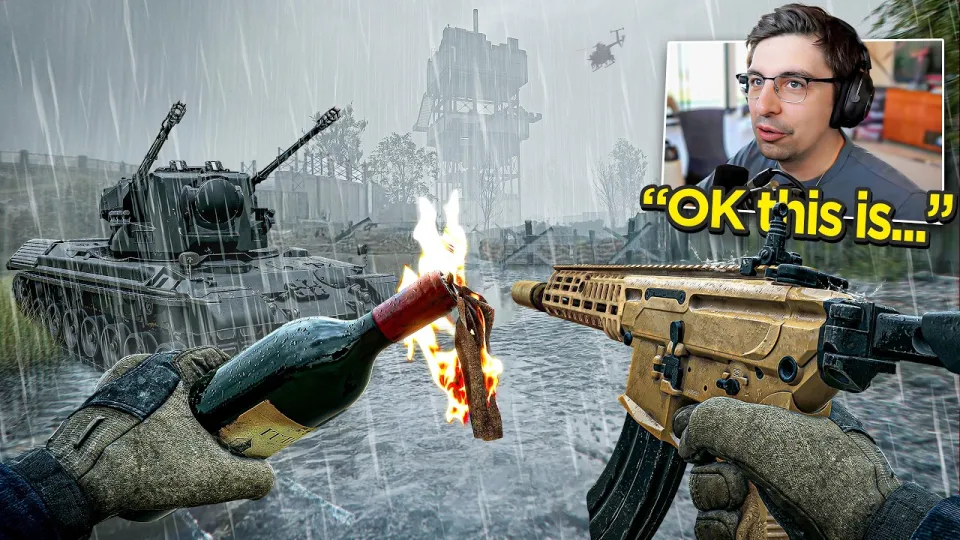
Video: Wardogs Is a Completely Different Game Now...
Need articles like this for your video? They help promote it on YouTube and Google — order them in the Telegram bot @sat_sit_bot. Articles with your video embedded are written and posted by the bot itself — on popular topical sites (no ads). Try it free: 50 articles on us.
· based on the channel shroud
Wardogs Season 2 has added rain, and that single weather condition has changed how the extraction shooter plays more than most balance patches do. Heavy rain cuts visibility across the map, shortens effective engagement ranges and turns long, careful sniper duels into close, messy fights where the player who reacts first usually wins. You can hear the full breakdown and the squad's live reactions in the Spotify show feed where the channel's content is collected.
What the Wardogs rain actually changes on the map
The rain is not a cosmetic overlay; it is a visibility tax on every long sightline. Players report that even around 190 meters it becomes difficult to see a target clearly, which means the open lanes and bridge approaches that used to reward a scoped rifle now reward patience and a short-range weapon. The storm also changes sound, so footsteps and gunfire from inside buildings become harder to place, and fights that start at distance tend to collapse into the same compound within seconds.
- Long-range optics lose most of their value; scopes still work, but there is nothing clean to see through them.
- Rotations across open ground become riskier, because you cannot spot a holding player before they spot you.
- Interior fights and stairwell holds become the default, since buildings stay dry and readable.
- Thermal and infrared optics become noticeably stronger, because they cut through the rain haze better than plain glass.
Why HP ammo is the real winner of Season 2
The rain shortens fights, and short fights reward leg shots with HP rounds. Armor in Wardogs covers the torso and head, so a player dumping rounds into a chest plate while a target runs away is losing the exchange even when the hit markers look good. HP ammunition aimed at the legs bypasses that armor entirely and drops a target in far fewer hits.
The most common mistake in the new meta is treating a bad weapon as the problem. A submachine gun loaded with the wrong ammo type will feel terrible no matter how many rounds land, and swapping to HP and aiming low fixes more fights than swapping guns does. The practical checklist:
- Check which ammo type is loaded before you complain about a weapon's damage.
- Bind a fast reload and repack magazines before you push, not during a drop or a ladder climb.
- Aim at legs at close range, since rain fights almost always happen inside 50 meters.
- Keep a backup magazine of standard rounds for armored targets holding angles at distance.
Squad play versus a bigger, uncoordinated lobby
Six players in one voice channel with clean callouts will beat twenty players who are not working together, and the rain amplifies that gap. Weather removes the information that solo players rely on, so the squad that shares what it sees keeps the advantage. A group that calls out a shooter's building, covers the ladder and pushes together converts a confusing fight into a clean trade, while a group that scatters gets picked off one at a time in the fog.
The flip side is that coordination does not fix bad decisions. Dropping into a building where someone just shot you, opening your inventory mid-fall to repack magazines and then dying to the same player is a positioning error, not a weather problem. Rain punishes hesitation and rewards the squad that already knows the layout of the compound it is fighting in.
Base building and the new map rhythm
The rain has changed where fights happen, and that has changed where players build. Groups are settling into fixed strongpoints, stacking defenses on towers and bridges, and holding them through repeated raids rather than roaming. A well-built base in a dry interior becomes far more valuable when the alternative is standing in a downpour with no visibility.
That shift also means the map feels different from one session to the next. Pushing out of a defended position and suddenly recognizing a landmark from a previous raid is a common experience now, because the weather forces players to learn the map in small, close-range pieces instead of from a hillside with a scope. The rain gives the game more room for different playstyles, from the aggressive interior pusher to the patient defender who never leaves the tower.
Recoil control and mechanics under pressure
Watching a top-tier player control recoil in the rain is a reminder of how much of Wardogs is mechanical. Spray patterns at close range matter more than they did when fights started at 200 meters, and the players who can hold a burst on a moving target's legs while water runs down the screen are the ones who win exchanges. The rain does not lower the skill ceiling; it moves it from precision aiming to burst discipline and target selection.
Health management also becomes a real decision. Calling out a low health value changes how your squad pushes, and misjudging exactly how much health you have left is a fast way to lose a fight you should have won. Track your health, know your ammo type and commit to a plan before you enter a building.
Links from the video
- Spotify show feed
- Logitech G products with the creator code
- Maingear custom PCs
- shroud on Twitter
- shroud on Twitch
The verdict on Wardogs Season 2 rain
Rain is the most meaningful change Wardogs has made in a long time, because it alters visibility, engagement range, ammo choice and base strategy all at once. Sniping has taken a real hit, and players who built their game around long sightlines will need to relearn their positioning. Everyone else gets a tighter, louder, more chaotic shooter where squad coordination and the right magazine matter more than a clean scope. For a full look at how the weather plays in practice, the breakdown from the channel shroud walks through the fights, the mistakes and the moments where the storm decided the outcome. Subscribe to the Spotify show to catch the next round of Wardogs sessions.
Key takeaways
- Wardogs Season 2 introduces heavy rain as a map-wide weather condition that reduces visibility at ranges as short as roughly 190 meters.
- Rain makes sniping unreliable and pushes fights into closer ranges, changing which weapons and loadouts are worth carrying.
- HP ammunition becomes far more valuable in the rain, because leg shots bypass armor and drop targets faster than torso fire.
- Thermal and infrared optics gain value in rain, while players without them lose much of their long-range information advantage.
- Squad communication matters more in the new weather, since a coordinated group of six can outfight a larger uncoordinated lobby.
Questions & answers
Does rain in Wardogs Season 2 make sniping useless?
Not useless, but heavily disadvantaged. Visibility drops enough that targets become hard to identify at around 190 meters, so scoped rifles lose the clean long-range duels they used to win. Sniping still works from elevated positions over shorter lanes, but most fights now resolve inside buildings and compounds.
Which ammo should I use in the rain?
HP rounds aimed at the legs are the strongest option in close-range fights, because leg shots bypass armor and drop targets faster than torso fire. Many players lose exchanges with a perfectly good submachine gun simply because standard rounds are loaded. Carry a backup magazine of standard ammo for armored targets holding distance.
Do thermal or infrared goggles get better in bad weather?
Yes. Because rain haze reduces normal visibility, optics that cut through it give a real information advantage. Expect infrared and thermal gear to become more contested and more valuable as players adapt to the new conditions.
Can a small squad beat a larger lobby in the rain?
A coordinated group of six on voice comms usually beats a larger group that is not working together, because the weather removes the information solo players depend on. Shared callouts, covered pushes and traded fights matter more than raw numbers when nobody can see far.
Source: Wardogs Is a Completely Different Game Now... · Markdown version